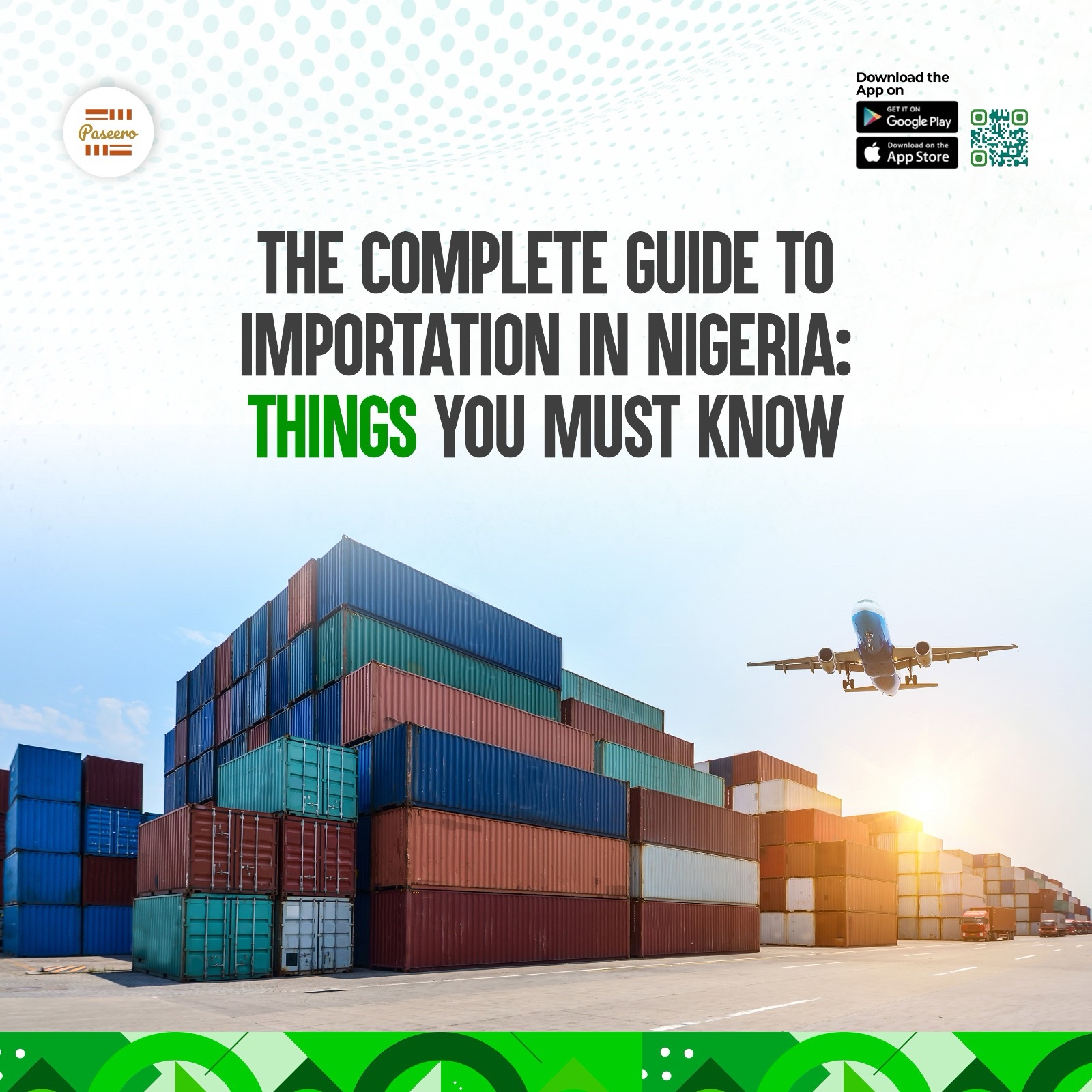
The Complete Guide to Importation in Nigeria: Things You Must Know (2026)
The costliest import mistake is ordering first and checking the rules later. Goods that are banned, or that need a certificate you don’t have, can sit at the port while charges pile up. This guide walks you through every step in the right order, with the official portals to use at each one.
How do I register as an importer in Nigeria?
Register your business with the Corporate Affairs Commission (CAC), get your Tax ID, then sign up on the Nigeria Single Window and B’Odogwu customs platforms. That is the sequence on the official trade portal.
- Tax ID (formerly TIN). Since January 2026, FIRS has become the Nigeria Revenue Service (NRS). Registered businesses now use their CAC number as their Tax ID.
- Authorised dealer bank (ADB). Pick a bank to process your Form M and act as the go-between with Customs, as explained by the Nigerian Ports Authority.
- Licensed customs agent. You can apply for permits yourself, but the trade portal says customs clearance needs a licensed agent.
Which goods are banned or need approval before I order?
Check the Customs prohibition list first, then get approvals for regulated goods before you pay your supplier. The official list is longer than most people expect.
- Banned examples: frozen poultry, pork and beef, bagged cement, used fridges, air conditioners and compressors, footwear and bags, and even toilet paper and retail-pack soap. Used cars older than 12 years from the year of manufacture are also banned (older guides still say 15). Second-hand clothing is absolutely prohibited.
- SONCAP (product standards approval from SON). You need a Product Certificate to open Form M and a per-shipment SONCAP Certificate for clearance. SON’s fees are $500 for a one-shipment Product Certificate and $1,000 for one valid for a year.
- NAFDAC (food, drug and cosmetics regulator). Regulated products must be registered before import. Registering a food product can take one to three months, so start early. Cosmetics follow the same rule.
What is Form M and how do I get one?
Form M is your electronic import application. You file it through your authorised dealer bank on the B’Odogwu platform, and Customs must accept it before your supplier ships. Your supplier then needs the accepted Form M to get your SONCAP certificate, per the official sequence.
Customs targets 24 hours to register a Form M once your bank has validated it. If your Form M sits on the old NICIS II system, Customs says no fee has been authorised for migrating it, so don’t pay anyone who asks.
Know what businesses are booming in Nigeria
What shipping documents must my supplier send?
Your supplier must send a commercial invoice, packing list, bill of lading (or airway bill), a certificate of value and origin, and an insurance certificate. The trade portal checklist adds your product certificates and permits.
Make sure names, quantities and values match your Form M exactly. Mismatches are an easy way to slow clearance.
What is PAAR and why won’t Customs release goods without it?
PAAR (Pre-Arrival Assessment Report) is the Customs document that lets you start clearing your cargo. You apply for it on B’Odogwu once your final documents and certificates are in. Any SONCAP certificate must be activated first, and Customs targets 24 hours to issue the PAAR after your bank uploads the papers.
How much are import duty and taxes in Nigeria?
Duty depends on your product’s HS code (the global product classification number) and falls in five bands: 0%, 5%, 10%, 20% or 35%. Per Customs, 0% covers essential social goods, 5% raw materials and capital goods, 10% intermediate products, 20% consumer goods, and 35% specific goods for economic development.
VAT of 7.5% and levies come on top, and the official portal lists fees and charges to budget for. Here is a simple illustration with a customs value (CIF, meaning cost plus insurance and freight) of ₦10,000,000 on a 20% item:
Watch the levies. The trade portal lists a 1% CISS (import supervision) fee on CIF value. But the 2023 Customs Act allows not less than 4% of FOB value (the goods’ price at the port of loading). Customs suspended it in 2025, then resumed it, and the Finance Ministry ordered another suspension on 15 September 2025. Some 2026 guides still show 4%, so ask your agent which charge applies on your assessment date. Test your numbers on the official duty calculator.
How long does customs clearance take?
Customs targets 24 hours for Form M, 24 hours for PAAR and 48 hours for examination release, but only after your paperwork is complete. See the published timelines. Real timing depends on your port, your cargo and how fast your approvals come through. Plan for weeks, and for months if NAFDAC registration is involved.
What mistakes cost first-time importers the most?
Skipping a step in the sequence is the biggest one, because each document unlocks the next.
- Ordering before approvals. Your supplier can’t get a SONCAP certificate without your accepted Form M, and some products need NAFDAC registration even earlier.
- Guessing the HS code. The code sets your duty band, so a wrong guess changes your cost. Use the official duty calculator and confirm with your agent.
- Mismatched paperwork. Values, quantities or names that differ between your invoice, packing list and Form M invite questions at the port.
- Budgeting only for duty. VAT, levies, agent fees and port charges all add to the final bill.
Should I test demand locally before I import?
Yes, if you’re new. An import commits a large sum before you know whether the product sells, so run a small local test first.
Notice what the import system does: nothing moves until the right checks pass. Form M, SONCAP and PAAR each hold the shipment until a condition is met. Escrow works on the same logic for everyday buying. On Paseero, your payment is held until you confirm delivery, so you can order sample products from local sellers, check quality and price, and see what buyers actually pay. Selling a small batch locally the same way tells you whether the margin survives duty, VAT and clearance costs.
Quick answers on importing into Nigeria
- Do I need a customs agent? Yes, for customs clearance. Permits you can apply for yourself.
- Does my old TIN still work? Old TINs have been replaced by the Tax ID, and your CAC number is your business Tax ID.
- Can I import second-hand clothing? No, it is absolutely prohibited.
- How much is a SONCAP Product Certificate? $500 for one shipment or $1,000 for a year, per SON.
- Can I pay someone to migrate my Form M? No, Customs says it has authorised no such fee.
- Do cosmetics need NAFDAC registration? Yes, before they are imported or sold.
What should I do before my first order?
Check the ban list, confirm your approvals, open Form M, get your PAAR, then clear with a licensed agent. Before you pay a supplier, run your HS code through the duty calculator and get your agent’s cost estimate in writing. Share this guide with anyone planning their first shipment.
Sources