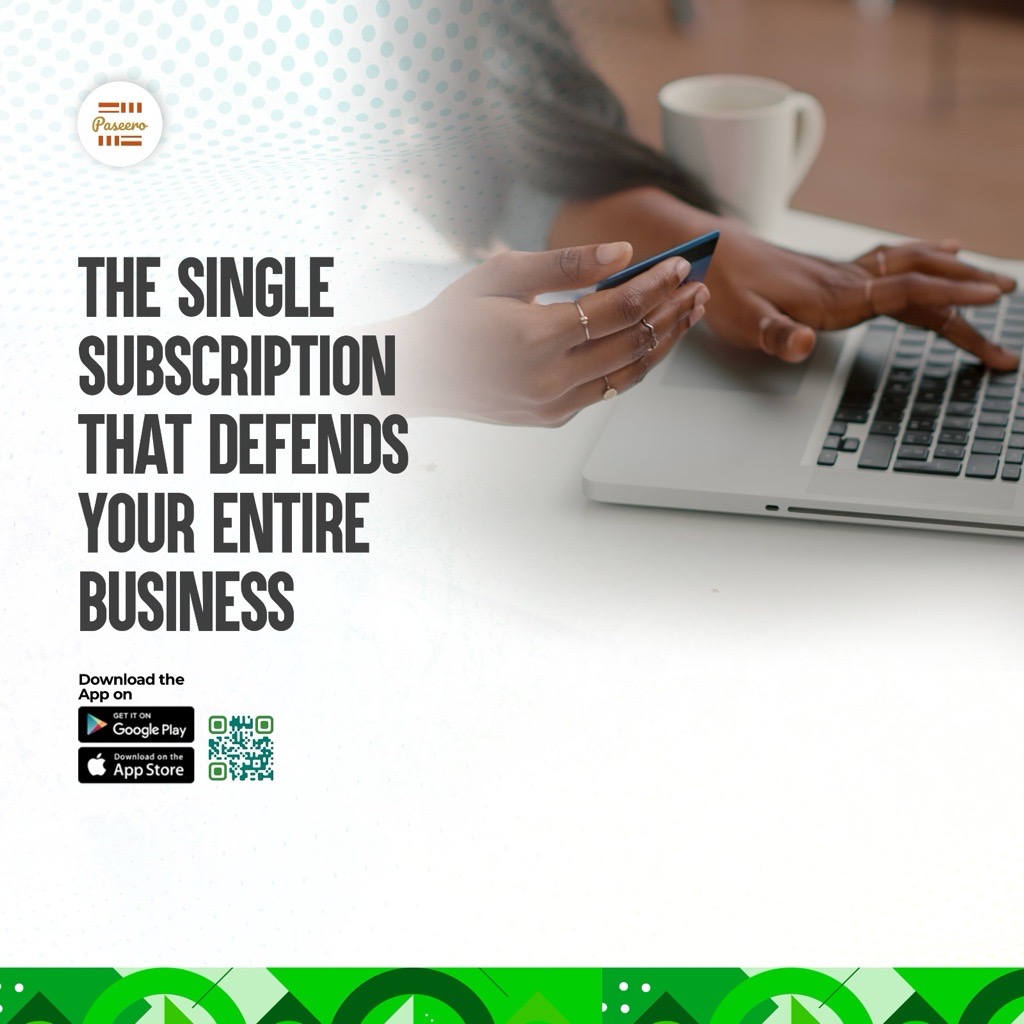
The Single Subscription That Defends Your Entire Business
Key Takeaways
- Nigeria's insurance penetration sits below 1% of GDP (NAICOM), meaning most small businesses have zero cover for stock, theft, or liability.
- Only about 13% of Nigerians, roughly 21.7 million people, have health insurance (NHIA, 2025), and self-employed owners make up the bulk of the uncovered.
- A single bundled subscription can close both gaps, personal health cover and business cover, in one predictable payment.
You're The Business: Why One Health Scare Can Shut Everything Down
If you run a small business in Nigeria, you're probably the business itself, and that's not just a figure of speech. SMEs contribute close to half of Nigeria's GDP and account for 80 to 84% of employment (SMEDAN), which means millions of businesses like yours don't have a backup person. There's no second-in-command to pack orders or answer customers if you're out.
Picture this: a vendor who sells shoes on Instagram is admitted to the hospital for two weeks. No one else packs orders. No one else replies to customers. No one else goes to the bank. By the time she's discharged, three customers have asked for refunds, and two have left bad reviews.
That's not bad luck. It's a business risk. If the owner can't work, the business can't run. Your health isn't just a personal matter, it's a business continuity issue (the ability of your business to keep running through a disruption).
What Is Business Insurance For Small Business Owners In Nigeria
Business insurance is a policy that pays out when something happens to your stock, shop, equipment, or a customer makes a claim against you. Despite how essential this sounds, Nigeria's insurance penetration rate remains below 1% of GDP (NAICOM), one of the lowest in Africa, largely because most SME owners assume cover is only for large corporations. In plain terms, business insurance covers three main things:
- Damage or loss of goods: fire, flood, or accidents that destroy stock or equipment.
- Theft: stolen inventory, cash, or tools of trade.
- Liability: a customer claims your product or service harmed them, and you're legally responsible (liability cover) for the cost of that claim.
A one-person operation selling from a single room or a rented shop carries the same categories of risk as a large company, just at a smaller scale. A single fire, flood, or theft incident can wipe out months of profit in one day.
Do Small Business Owners Need Health Insurance Too
Yes, and this is the layer most Nigerian SME owners skip entirely. Only about 13% of Nigerians, roughly 21.7 million people, currently have health insurance (National Health Insurance Authority, 2025), and self-employed workers, who make up 81% of the employed population, have historically been the least covered group (Commonwealth Fund). Health insurance (through an HMO, or Health Maintenance Organisation) covers the cost of medical treatment, so an illness doesn't become a financial emergency on top of a health emergency.
Here's what owners underestimate: your fixed costs (the bills that stay the same whether you're working or not, like rent, staff salaries, and loan repayments) don't pause while you recover. Out-of-pocket spending already accounts for over 70% of total health expenditure in Nigeria (NHIA), and a two-week hospital stay with no cover simply adds your lost business income on top of that bill. That double hit, medical costs plus lost revenue, is what actually collapses small businesses after a health event, not the illness itself.
Why One Subscription Beats Five Separate Insurance Headaches
If health cover and business cover are both necessary, why do so few Nigerian SME owners have either? It isn't awareness, it's friction. Comparing HMO plans, then separately comparing business insurance providers, then paying two or three different premiums on two or three different schedules, is exhausting for someone already running a business alone.
A single, bundled subscription, one predictable payment that combines personal health cover and business cover, removes that friction. Instead of five separate headaches, it becomes one line item you budget for monthly or annually, the same way you already budget for data or electricity.
Worried that claims won't actually pay out? That objection is common, but it's increasingly outdated. In Q4 2025, Nigerian insurers settled 75.5% of non-life claims and 65.5% of life claims (NAICOM), a sign the industry is under real pressure to deliver, not just collect premiums. “Nothing has happened to me yet” is still the wrong test for whether you need cover. Insurance isn't proof that something will happen, it's protection for the one time it does.
Where Paseero Fits Into Your Business Protection
Insurance and escrow protect two different things, and together they cover more of your business than either does alone. Paseero already protects the money side of every transaction, your payment or your buyer's payment is held securely (via escrow) until delivery is confirmed, so no one loses money to a vendor or buyer who disappears.
Insurance protects everything around that transaction: your health, your stock, your shop, your liability if something goes wrong with a customer. Think of it as two layers of the same protection system. Escrow secures the money in motion. Insurance secures the person and the assets standing still. A seller running a fully protected business needs both.
How To Get Covered With A Business Insurance Bundle This Month
Getting started doesn't require becoming an insurance expert. Here's a practical first step:
- Confirm the provider is licensed. Check that any insurer or HMO you consider is registered with NAICOM (National Insurance Commission), Nigeria's regulator for insurance providers.
- Ask specifically for an SME or business bundle. Many providers now offer combined plans built for small business owners rather than large corporations.
- Compare what is actually covered. Ask plainly: does this cover stock damage, theft, liability, and my personal health, or only one of these?
- Start with what you can afford, then scale. A basic bundled plan beats no plan while you wait for the “perfect” one.
Frequently Asked Questions
What's the difference between health insurance and business insurance? Health insurance covers your medical costs as the owner. Business insurance covers your stock, shop, equipment, and any liability claims from customers, they protect two different sides of the same business.
Do I really need insurance if my business is small? Yes. Small businesses carry the same categories of risk as large ones (health, theft, damage, liability), just at a smaller scale, and often with less financial cushion to absorb a loss. Fewer than 1 in 100 Nigerian businesses currently carry insurance cover, based on the country's sub-1% penetration rate (NAICOM).
Is business insurance expensive for a small Nigerian business? Costs vary by provider and coverage level, but bundled SME plans are generally built to be more affordable than buying separate health and business policies.
Can I get one plan that covers both my health and my business? Yes, bundled subscriptions combining personal health cover and business cover are increasingly available from Nigerian providers and are worth asking for by name.
How is this different from what Paseero's escrow already protects? Escrow protects the money in a transaction until delivery is confirmed. Insurance protects you and your assets outside of that transaction, your health, your stock, and your liability.
How do I know if an insurance company in Nigeria is licensed and reliable? Confirm the provider is registered with NAICOM (National Insurance Commission) before signing up, this is the regulator responsible for licensing insurers in Nigeria.
The Bottom Line
A business with no insurance is one incident away from starting over, one hospital stay, one fire, one theft, one liability claim. With insurance penetration below 1% and health cover reaching just 13% of Nigerians, most SME owners are carrying that risk alone right now, whether they realize it or not. A single bundled subscription that covers both your health and your business closes both gaps at once, without adding five new bills to track.
Shop and sell with confidence on Paseero, your transactions are already protected by escrow. Explore a bundled health and business insurance plan to protect everything else.
Sources: National Insurance Commission (NAICOM) Q4 2025 Insurance Market Performance Bulletin; National Health Insurance Authority (NHIA) 2025 State of Health of the Nation Report; Commonwealth Fund Nigeria health system profile; Small and Medium Enterprises Development Agency of Nigeria (SMEDAN) 2025 MSME data.