
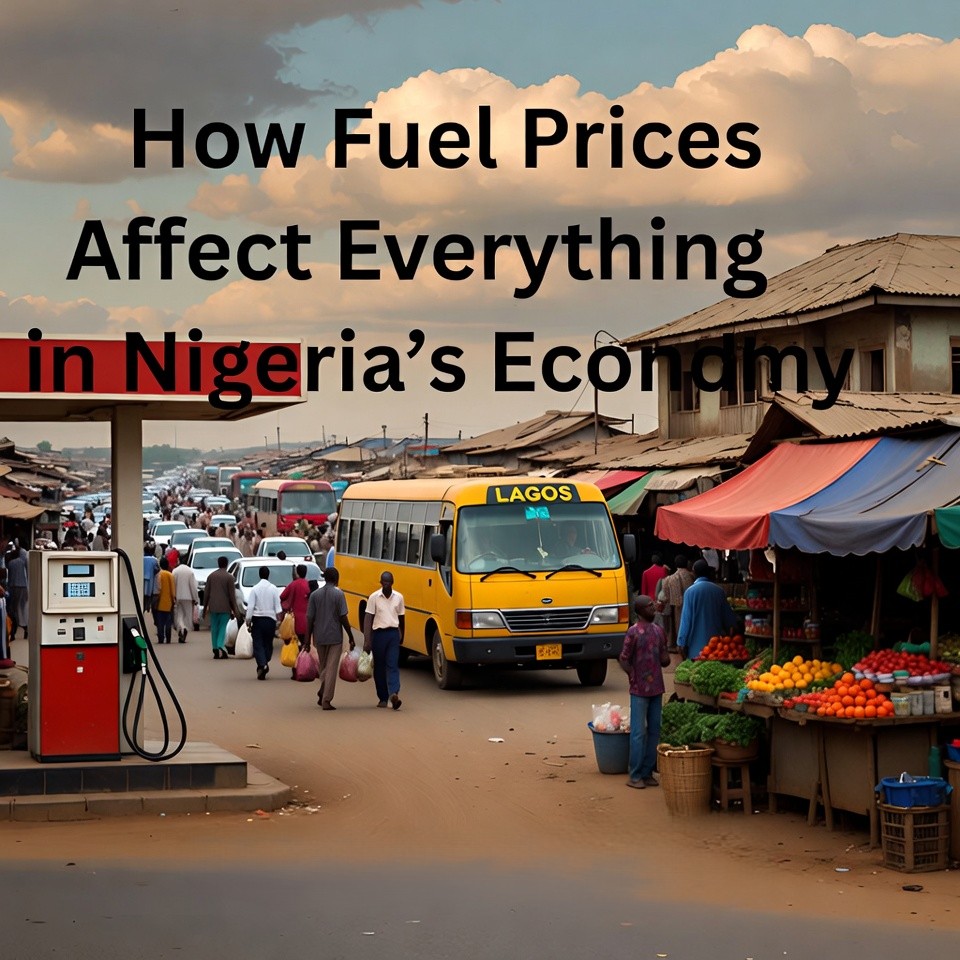
How Fuel Prices Affect Everything in Nigeria's Economy
Understanding the effect of petrol costs on daily life
If you've been to the market recently or paid for transportation, you already know something is different. The prices keep changing, sometimes weekly. What many people don't realise is that most of these changes trace back to one thing: fuel prices.
In Nigeria, fuel isn't just what powers your generator or fills your car tank. It's what directly or indirectly affects nearly every aspect of the economy, from the food you buy to the transport you take, from business costs to the general cost of living. Let's break down how this actually works and why it matters to you.
The Current Fuel Price Situation in 2026
As of January 2026, fuel prices in Nigeria [1] are hovering between N739 and N910 per liter depending on where you are in the country. This might seem like good news compared to late 2025, when prices were consistently above N900, but there's a catch.
Industry experts are warning that this drop is temporary and is driven by what they call a "price war" between the Dangote Refinery and petroleum importers. Both sides are losing a lot of money in their efforts to outdo each other by lowering prices, and that can't last forever. The Central Bank [3] has even projected that fuel could average around N950 per litre through 2026 once things stabilise.
Why Fuel Prices Control Everything in Nigeria
Here's the thing about Nigeria's economy: we're uniquely dependent on fuel in ways that other countries aren't, and I'm not just talking about cars and buses.
The Generator Economy
Think about how unreliable NEPA (or PHCN) is. Almost every business in Nigeria runs on generators for at least part of the day. Small shops, restaurants, factories, and even hospitals, they all need fuel to keep running.
When fuel prices go up, these businesses won’t bear the cost [4]. They will pass it on to customers. That's why you'll notice that the price of everything from foodstuff to fashion tends to rise soon after fuel prices increase.
Transportation and Food Prices
Nigeria is a big country with terrible roads. Getting goods from one place to another costs a lot, and most of that cost is fuel. When you buy tomatoes at the market, you're not just paying for the tomatoes; you're paying for the fuel that brought them from the farm to the market.
During the fuel price increases in 2024 and 2025, we saw food prices skyrocket. Rice, beans, garri, everything became more expensive. It's not because farmers suddenly became greedy; it's because transporting food became more costly. Some farmers even complained that fertiliser and farming equipment costs tripled because they also depend on fuel for transportation and operation.
What This Means for Average Nigerians
As of late 2025, inflation had cooled down to about 15% officially, but most Nigerians will tell you it doesn't feel that way. The cost of living remains extremely high.
Financial experts estimate that a family of four needs somewhere around N2 million monthly just for basic expenses, rent, food, transportation, and utilities. A single person needs over N1 million. Yet the reality is that most Nigerian workers earn far less than this. It's no surprise that more than half of Nigerians report struggling to make ends meet.
Take someone like Riyah James (not her real name), a primary school teacher in Lagos. She told researchers that after paying for transportation to work, there's "hardly anything left" for other expenses. "Sometimes the conductor increases the fare overnight, and I literally don't have "Shopping at the market has become a luxury."
Her story isn't unique, it's the reality for some Nigerian workers whose salaries haven't changed.
The Experts Are Divided on What Happens Next
If you're wondering what comes next, well, even the experts can't agree.
The Central Bank of Nigeria is relatively optimistic. They're projecting that inflation will drop to around 13% in 2026, partly because they expect fuel and food prices to stabilise. Their thinking is that with local refineries like Dangote coming fully online and some of the economic reforms taking effect, things should improve.
But then you have the International Monetary Fund painting a much darker picture. They're projecting inflation could actually hit 37% in 2026. Nigerian economists have pushed back hard against this forecast, calling it "overly pessimistic" and disconnected from what's actually happening on the ground.
The truth is probably somewhere in the middle. What we know for certain is that fuel prices will continue to play a major role in whichever direction things go.
The Dangote Refinery Question
A lot of people had high hopes that the Dangote Refinery would solve our fuel problems and bring prices down significantly. The logic was simple: if we're refining fuel locally instead of importing it, costs should drop.
Unfortunately, it hasn't quite worked out that way, at least not yet. The refinery is still dealing with some technical issues that are limiting how much fuel it can produce. Plus, they're not getting enough crude oil supply from NNPC as promised, which means they have to import crude oil and blend it. That undermines the whole "locally refined" advantage.
There's also this concern that we might be replacing one monopoly (government control) with another (private control). Some analysts point out that Dangote also dominates the cement industry in Nigeria, and cement prices haven't exactly been low despite that dominance.
The worry is: what happens after this price war ends and smaller competitors have been pushed out? Will prices shoot back up to N950 or even higher? Nobody knows for sure, but it's a valid concern.
What Can Actually Be Done?
This is where it gets tricky, because there's no single magic solution. But some things could help:
- Fix the power situation: If businesses had reliable electricity, they wouldn't need to depend so heavily on generators. That alone would break the direct connection between fuel prices and the cost of almost everything.
- Improve roads and transportation: Better infrastructure means lower transportation costs, which means the impact of fuel prices gets diluted a bit. It won't solve everything, but it helps.
- Support farmers directly: Whether through subsidised inputs or better security in farming areas, helping farmers stay in business is crucial. Otherwise, we're headed for a serious food crisis.
- Ensure real competition: The downstream petroleum sector requires genuine competition, not just a handful of large players dominating the market. Competition keeps prices more reasonable and prevents monopolistic behaviour.
- Provide safety nets: If fuel prices must stay high for economic reasons, then there needs to be targeted support systems for the most vulnerable, such as transport subsidies, direct cash transfers, or something that lessens the stress on average Nigerians.
The Bottom Line
At the end of the day, fuel prices in Nigeria are about everything. When fuel prices move, your transportation cost moves. Your food prices move. The cost of goods and services moves. Your quality of life moves.
Right now, we're in a weird middle ground. Prices are lower than they were a few months ago, but experts warn it might not last. The Dangote Refinery promises relief but hasn't fully delivered yet. Economic projections range from cautiously optimistic to downright scary, depending on who you ask.
For the average Nigerian, all the economic theories and projections boil down to simple questions: Can I afford to get to work tomorrow? Can I feed my family this week? Will I be able to make ends meet this month?
Until we address the underlying issues, power supply, infrastructure, agricultural support, and genuine competition in the petroleum sector, fuel prices will continue to affect Nigeria's economy. And millions of Nigerians will continue to bear the burden of an economic system where one commodity has way too much control over everything else.
If you’re looking to buy or sell used or brand-new phones safely in Nigeria, visit www.paseero.ng today and enjoy a secure, transparent, and buyer-friendly online marketplace.
👉 Shop smart. Sell confidently. Choose Paseero.
Sources
[1] https://www.premiumtimesng.com/news/top-news/852372-dangote-refinery-increases-petrol-gantry-price.html
[2] https://www.theafricareport.com/403994/dangote-backed-mrs-outguns-nnpc-in-petrol-price-war/
[3] https://www.vanguardngr.com/2026/01/cbn-forecasts-petrol-price-at-n950-per-litre-in-2026/#:~:text=The%20Central%20Bank%20of%20Nigeria,N950%20per%20litre%20in%202026.
[4] https://paseero.ng/market-place